Sailing in Datca Peninsula
Enjoy Sailing in Datca Peninsula with Yelkenli Yachting.
Hello...
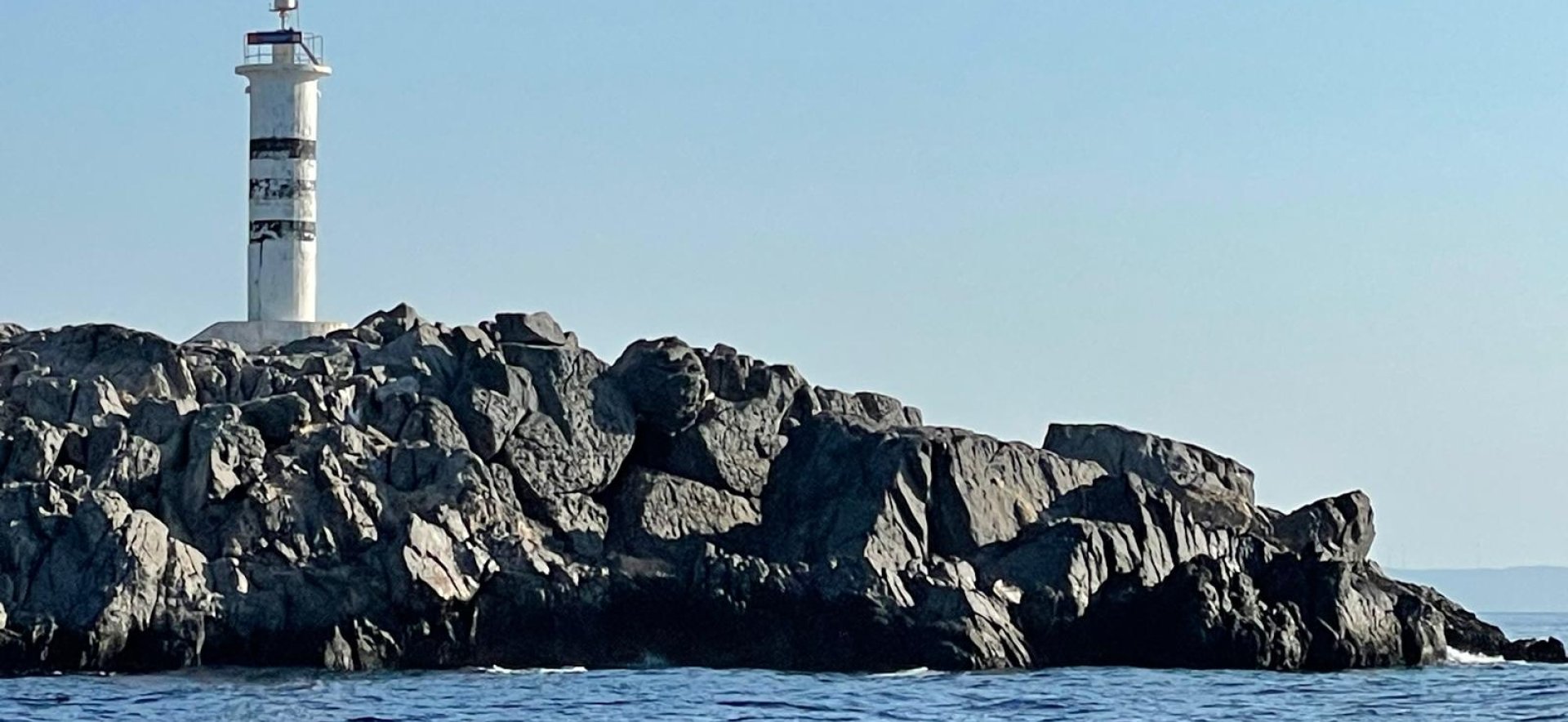
The big wide bracket descending from Kızlan Beli (Kızlan mountain pass), the narrowest and lowest part of the Datça Peninsula, where the wind turbines are located, towards İnce Burun, the end of the widest part of the peninsula is called Datça Harbor on the navigational map. Of course, there is also a small Datça harbor where boats are moored, but that's different. Uzunca Ada lighthouse, about a mile off the harbor, is also a triangulation point accepted as Datça harbor lighthouse.
Although there are a few small bays and islets as you go west from Kurucabük, the shores are not haunt for yachtsmen, as the coasts are completely full of summerhouse sites and the anchorage depths are surrounded by swimming area lines.
The wide beach of Kızlan Beli, where wind turbines are located, is also not preferred for staying at anchor. Moreover, although the bottom is sandy and the prevailing wind blows from land. For this reason, the boats shoving off Kurucabük, if they intend to go to Datça, usually either moor the harbor, stay at anchor across the harbor or anchor in front of the beach on the north ridge of the harbor.
Datça harbor is a customs gate. You can enter and exit. Also waste can be given. The harbor is built into a natural bay. During the summer the wind blows from the land, but in winter the most destructive storms come from the south and unfortunately enter through the mouth of Datça harbor. In order to prevent this and to be able to build a marina in the berth opposite the harbor, a great work was accomplished. Between the tiny Topanca Island at the southern entrance of the bay where the harbor is located and the mainland has been filled. A strong breakwater was built and Topanca Island was erased from the map. Thus, the southern mouth of the harbor became very sheltered. But for some reason, after this laborious work, the marina was abandoned. It is said that environmentalists are blocking it, but I have no clear information about the lawsuits. All I know is that there is a dire need for marinas in the area. For some reason, we always think that the seas can be polluted by those on top of it, never by those on the shore...
In Datça harbor, just like Bozburun harbor, there is no vault, you will anchor. Unfortunately, since the stern dock has a concave structure towards the sea, the anchors can overlap and cause anchors to get tangled. Since the bottom is sandy and holds anchors well, I can suggest you to leave the long chain work to big gulets and motor yachts and anchor in clear areas after passing their chains. Let me remind you that your cockpit will be on the shore of the bar street and the cats will examine it like a boat designer whenever they have the opportunity.
After Datça harbor, the coast goes south until Ince Burun and draws the widest part of the peninsula. You will find Kargı Bay 1-1.5 miles south from the harbor exit (from the old Topanca Island). There is also a road from the harbor, walking is shorter. The bottom does not hold anchor firm, but it is still a very popular bay for staying at anchor.
Just 3-4 cable south of it, an indentation called Aquarium, which is a must for daily tour boats, promises you a magnificent swimming pleasure. It will be much more practical and effortless to go here by boat from Kargı.
Ince Cape, which represents the southernmost tip of the Datça Peninsula, is really thin, elegant and very pretty. "Fl(3) 15h 14m 8m" lighthouse is one of our important lighthouses. A natural and elegant breakwater extending towards the lighthouse stops the southern waves. It forms a wonderful berth inside the breakwater. Especially when you catch the bay empty, which is frequented by gulets, I say don't miss it. Immediately let go the anchor, moor to the rocks of the breakwater.
Between Ince Burun, the southernmost point of the Datça Peninsula, and Knidos, the westernmost point, there is almost no virgin berth. Though, we have already mentioned how many safe and suitable berths for spending the night there were in Hisarönü and Yesilova bays. Many swimming break points.
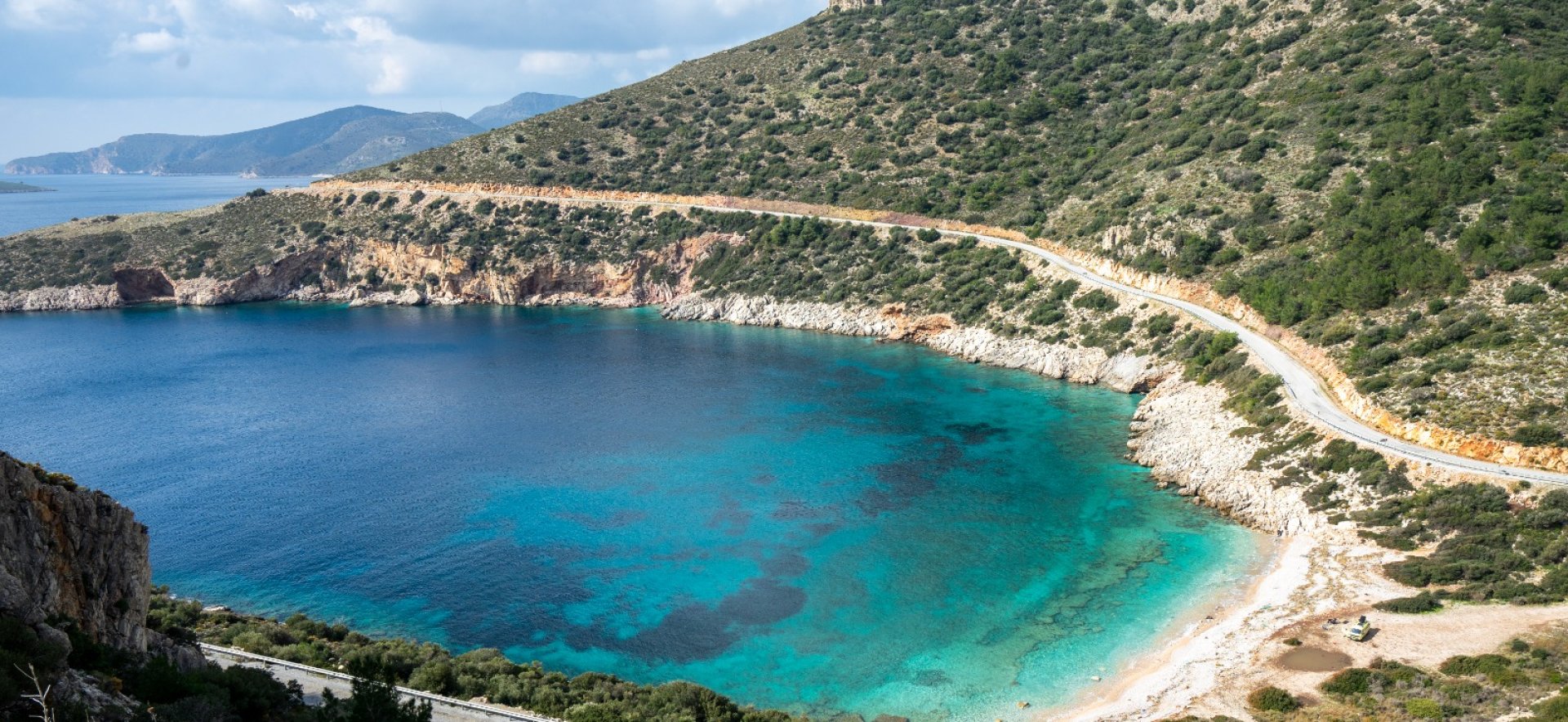
When you go around Ince Burun and head west for about two miles, you reach the indentation called Pig Pit (Domuz Çukuru) by the locals. Unfortunately, this place, which is a magnificent paradise corner with its wonderful sea, beach and lush wooded nature, is not safe. It is open to wind, waves and swell. Don't leave the boat alone, even during a swimming break, and don't stop the engine. Even a wave from a sheering off motor yacht can be dangerous.
In fact, you cannot find these coasts of Datça Peninsula without swell. This is the case in the three berths we will describe now. Even when there is no wind at all, you see the boat swaying with dead waves. Perhaps for this reason, there is a lot of debris in this cruising area. All headlands and ledges should be sheered off.
About 2,5-3 miles west of the Pig Pit is Hayıt Bükü. It is almost impossible to see the entrance from a distance. It is at a place where the mainland moves a little away from you by making an indentation while cruising to the west. Approaching the peninsula by steering slightly north, you have to search for the entrance of Hayıt Bükü. It used to have a wooden dock. It used to be possible to let go the anchor and stern to, but now the best option is to stay at anchor. The small breakwater of the fishermen's shelter tucked into the corner has been improved, allowing yachts to stern to outside the shelter. Even though it shakes a bit with the swell, the vault and electricity and water facilities are provided. But unfortunately don't attempt to use the restroom... Hayıt is a village with a very beautiful nature. If you go up the ridge at the back, you will see that there is another bay on the other side of the village facing the southwest, where there are almond and olive groves. Of course, meeting with tourism increases the summer population a bit, but it is still a quiet, peaceful village. I have never regretted my overnight stay so far. Moreover, you can take a minibus to Datça and take care of your urgent needs.
By the way, let me tell you about a funny incident that happened in Hayıt Bükü. I didn’t see it, I’m a liar of stories that was told. As I said, there used to be a wooden pier and the mukhtar's office used to collect mooring charge against a receipt. The municipality came and pulled down the pier. When the facility directly opposite the pier realized that its income from boaters had fallen too much, it built a floating pier with its own means. The municipality came by boat this time. Under the helpless gaze of the owner of the facility, he tied the pier and towed it away...
Three miles west of Hayıt Bükü we find Palamut. Spread over a wide plain, the village has benefited more from tourism with the advantage of its long beach. The summer population reaches serious proportions. Palamut has a harbor with a concrete breakwater at the western end of the sandy beach that makes a very long and wide crescent, north of Palamut Island. There's vault in the harbor. The attendant will direct you.
Of course, when you hear sandy beach, you must understand waves and swell. The bottom is sandy until quite far off the beach. It's possible to stay at anchor all along the beach. These sands and vacationers have important effects on the entrance and exit of the harbor. The harbor mouth can fill with sand and become shallow from time to time and usually swimmers can be found right at the harbor mouth. Enter and exit extremely slowly and with everyone on the boat observing, especially with a crew member on the bow.
To the west of the harbor there is another pebble beach. The water here is colder than on the main beach and the waves are more manifest. This gravel beach is not suitable for anchoring offshore.
After shoving off from Palamut and turning around Divan Cape, there is no possibility to stop until Knidos. The distance is about 6-7 miles.
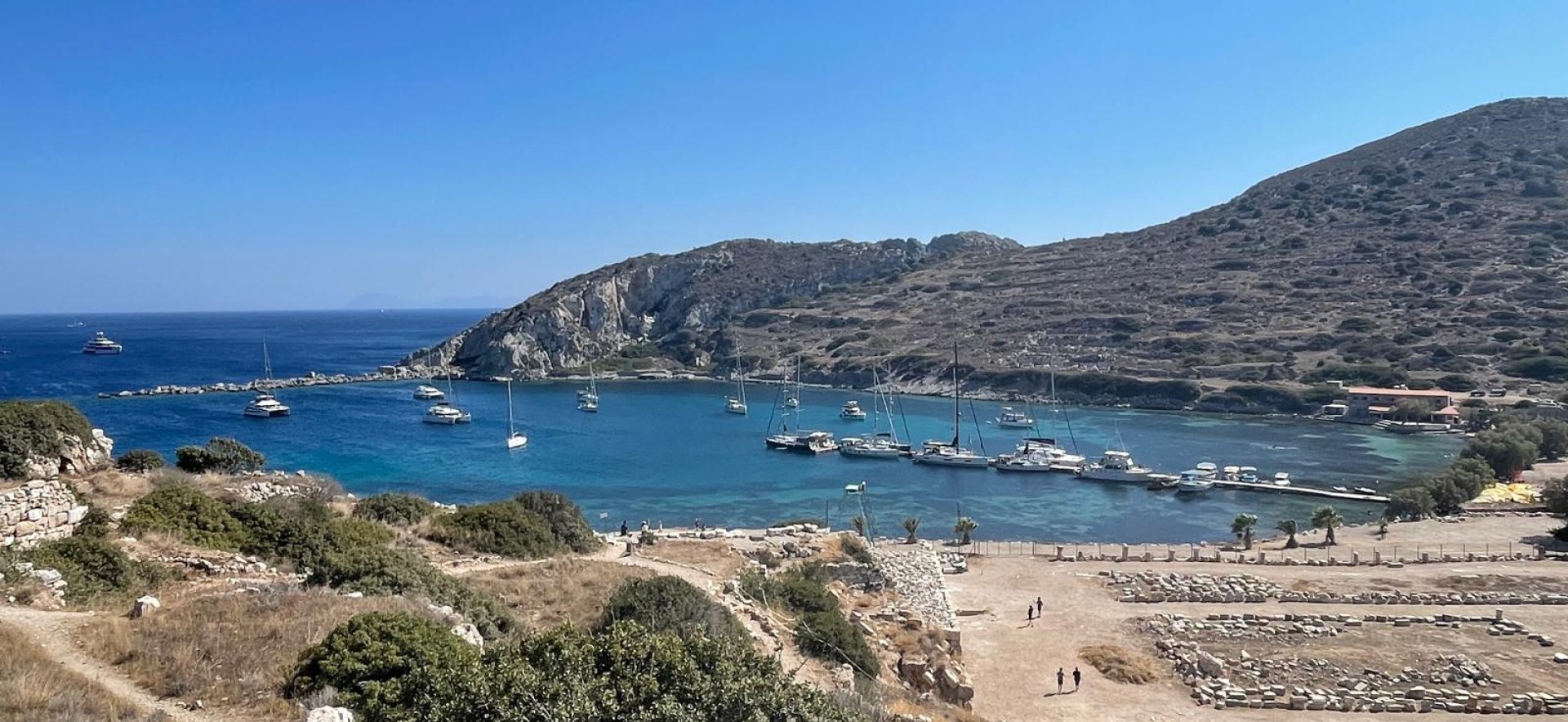
Knidos. A very special harbor. A port that fascinates, penetrates people, makes them question life, calms them down. The gate separating the Mediterranean from the Aegean. It makes you feel as if that ancient civilization never took a break, is still alive and we are their guests..
Please open master Sadun Boro's Vira Demir, which is on all the boats of Yelkenli Yachting. Even if you have never opened it so far, open this master work for Knidos. Apart from the maritime guides, you will find a page introducing Knidos. Read it, please. Then get up early in the morning and go to the lighthouse. Sit and wait for the sunrise over the theater...
We enter from the harbor mouth formed by the stones remaining from the historical breakwater of Knidos. There are actually two harbors in Knidos; north and south harbors. Deveboynu (Camel Neck) Cape looks like the head of a camel and its neck separates the two harbors. Still, it's better not to call it Cape Devebaşı (Camel Head). We are talking about the big, old commercial harbor in the south. The small, former military harbor in the north has filled up over time and is no longer usable today. Cape Deveboynu, which separates the Mediterranean from the Aegean, makes a very different, surprising sea. It is usually difficult to cross the Cape. You may even find yourself without wind while sailing soaking wet with the reefed sail. A pilot acquaintance of mine who was taking photos with his small airplane said, "How do you cross that cape, there is strange weather even up there, I can hardly hold the plane". This is Knidos... When you turn around Cape Deveboynu, you will notice that the climate changes immediately. The magic in Hisarönü and Yeşilova gulfs is suddenly broken. Dampness floods the boat.
There is a T pier in the harbor. The head of the T is the stern dock and the long part is along side. There is no vault. The whole area outside the pier belongs to the boats that stay at anchor. The bottom does not hold anchor very well. Even the anchor you think is holding may decide to drag after a while. It is usually foul berth, but you should still as much ease as you can. The sea is sparkling and cold. You feel the stream inside the harbor.
In the old days, when the power transmission line had not yet reached Datça, the generator in Knidos would be turned on and electricity would be supplied to the poles on the road towards Datça. I used to find this absurd.
You can't go to Knidos without visiting the ruins. The gods will be offended. During the Ottoman period, a British archaeologist, who received written permission from the sultan, took away many things from the statue of Aphrodite to the stones of the harbor, but even what remains is enough to make the visitors tremble. Everyone will leave Knidos a little differently on the way back, with its wide off board and scudding. As you roll down the slope, in the cockpit some will be in a sweet melancholy with the waves, some will be in chirpy excitement repeating what they have seen. How beautiful...
For sailors and sea lovers leaving Martı Marina, I have tried to introduce the cruising area, which can be visited in a week, in four parts. Actually, calling it a cruising area would be an understatement for this piece of paradise. Do not think that the information I have provided is enough for navigation. I only gave a chatty introduction to those who will come for the first time. You should definitely use a navigational map and guide book, which are already available on all our boats.
May you enjoy the sea, the wind, the waves in every state and in every berth. Wishing you well being...
turgut ilhan
(0) Reviews